


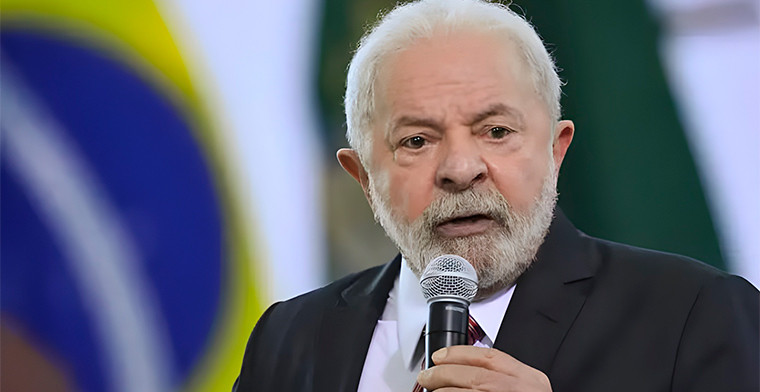
The issue of gambling has particularly mobilised the evangelical caucus in Congress, which is against legalisation. President Luiz Inácio Lula da Silva signalled on Friday that he would sanction a bill to free gambling in the country, such as bingos, casinos and jogo do bicho, if the National Congress approves the measure. On this subject, the president admitted that, from a personal point of view, he is not in favour of releasing gambling, but on the other hand, he explained that he does not consider this practice "a crime".
"I'm not in favour of gambling, no, but I don't think it's a crime either. If Congress approves it and an agreement is reached between the political parties, there's no reason why it shouldn't be sanctioned," said Lula during an interview with a local media from Piauí, where he travelled last Friday.
However, Lula then played down the claims of parliamentarians in favour of the measure when they say that legalisation will create jobs. "I don't think it's true that it will create two million jobs either. My game is income distribution, that's what makes people happy," he argued.
The president also implied that it was a contradiction to prevent the legalisation of games of chance while, at the same time, sports betting is allowed in the country.
"There was a time when the discourse on gambling had some truth to it. I always thought that gambling was the game that gave away the most money, but that's a misdemeanour, it's forbidden to play poker or cards. But what about the gambling that's going on in sport now?" he asked.
Finally, Lula indicated that he disagrees with the theory that gambling will mainly affect the poorest. "They say that the poor will lose their money in the casino. The poor don't go to the casino, they go to work in the casino," he said.
Evangelical Caucus Seeks to Halt Gambling Liberalisation in Congress
The issue of gambling has especially mobilized the evangelical bench in Congress, which is opposed to its liberalization.
As Valor showed yesterday, after a narrow approval (14 votes against 12) in the Constitution and Justice Commission (CCJ) of the Senate, the project to liberalize gambling has its next steps undefined.
This is because senators from the Evangelical Parliamentary Front asked the president of the Chamber, Rodrigo Pacheco (PSD-MG), during Thursday's leaders' meeting, that the project now pass through other committees, such as the Economic Affairs Committee (CAE), the Human Rights Committee (CDH) and the Public Security Committee (CSP).
The idea is to block progress on the text. In addition to the gambling issue, the Senate is preparing for an ambitious agenda of debates before the parliamentary recess, which begins on 18 July.
At Thursday's leaders' meeting, senators outlined with Rodrigo Pacheco the proposals they intend to debate, including the issue of offshore wind farms, the electoral code with an audience with Michel Temer and the exemption agreement reported by Efraim Filho. Also on the list are the states' debt proposal and the PEC Amnesty, which Arthur Lira presented and withdrew from discussion, and could be debated before the recess, but only with a broad debate and consensus among the leaders.
All PL senators in the CCJ voted against the project, while most of the other parties were internally divided. In the PT, of the four senators who participated in the vote, only Senator Janaina Farias, from Ceará, positioned herself against the text.
Positions on the text
The evangelical caucus argues that the legalisation of gambling could cause social problems, such as gambling addiction and financial bankruptcy, as well as favouring money laundering. On the other hand, the project's rapporteur, Senator Irajá (PSD-TO), argues that these activities already exist illegally in the country and that the project would make it possible to regulate them and collect taxes.
The project also prohibits loans or forward purchases for gambling and cash betting, imposing penalties on those who allow it. In addition, it provides for the creation of a regulatory agency, linked to the Ministry of Finance, to oversee the rules established by the new legislation. It includes specific rules for each type of gambling permitted and the creation of two taxes to be paid by licensed gaming and betting operators. It requires, for example, a minimum capital for the companies and the verification of the lawful origin of the resources.