


“At a peak time when the city is jamming, to think Atlantic Avenue could be one lane in each direction is a bit concerning,” Casino Association of New Jersey President Mark Giannantonio, who is also CEO and president of Resorts Casino Hotel, said via Zoom at Friday’s Clean and Safe Atlantic City meeting at City Hall. “Is it going to be a turn-off to people coming into Atlantic City at peak times?”
The road diet project is funded by a $10.3 million federal infrastructure grant sought by U.S. Rep. Jeff Van Drew, R-2nd.
City Council has approved its first phase from Maine Avenue in the Inlet to Tennessee Avenue in midtown, and preliminary work has begun.
The project also includes putting in Americans with Disabilities Act-compliant sidewalks, drainage facilities, new bike lanes, traffic signal synchronization, LED streetlights and improved accessibility at transit stops.
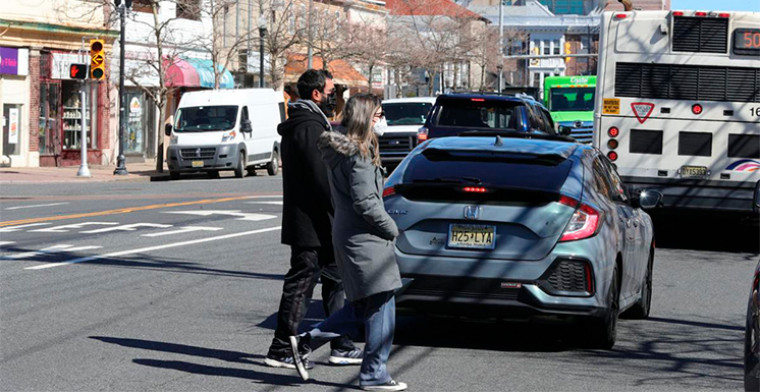
The idea is to improve safety by slowing vehicle traffic, synchronize lights so drivers don’t speed to make it through them and give pedestrians just two vehicle lanes to cross instead of four.
Giannantonio said there is a lot of worry that the changes to the main road through town will hurt casino business as well as that of small businesses.
“I hear you. That’s legit,” said Council Vice President Kaleem Shabazz, who represents the ward that includes a large section of center city where there is a density of small businesses. “We’ll address it. ... We are concerned too about anything that could affect the casino industry, businesses and residents in regards to traffic.”
Shabazz acknowledged there is some concern on council about how traffic will flow with the road diet, and said he will invite the city engineer — who is now on vacation — to a February meeting to answer questions.
“I have an engineering background, and I encourage you to really take a hard look at the road diet issue,” said Sen. Vince Polistina, R-Atlantic. “I don’t think it’s the right thing. ... One lane with events that happen is going to be very problematic.”
Other cities that rely on tourism have streets that are wide and welcoming, Polistina said. “They don’t restrict traffic like that,” he said.